Picture someone starting a major renovation for their new apartment or commercial space, searching for a team they can trust with their vision. When dealing with high-ticket services, clients make decisions based on emotion and visual impact. If your digital presence fails to reflect the standard you deliver in real life, potential clients will simply move on. That is why a professional design studio website is not merely a collection of images - it is your primary sales manager.
Standard approaches do not work when selling a premium service. From the first second, a client needs to feel the quality of materials, the attention to detail, and your level of craft. A bespoke website build allows you to translate the exact character and aesthetics of your brand directly onto the screen.
Why Instagram Cannot Replace a Design Studio Website
Social media is great for daily updates, short videos, and behind-the-scenes moments. However, when a client is planning a substantial budget, scrolling through a crowded feed does not build sufficient trust. On Instagram, it is tough to showcase detailed material specs, present a complete architectural concept, or display high-resolution renders and technical blueprints.
Furthermore, your content on social platforms constantly competes with ads and countless distractions. On your own website, the visitor steps exclusively into your world. Here, you control their focus, show your completed projects in your intended sequence, and clearly explain how you work.
To explore more about presenting intangible value, read our guide on the art of selling an invisible service.
What Makes a Design Studio Website Truly Effective?
A well-built website turns passive visitors into qualified leads. To achieve this, several core elements must work together:
- Large, crystal-clear visuals: High-resolution photos highlighting texture, lighting, and finishes. Low-quality images immediately undermine a luxury image.
- Curated project filtering: The ability for clients to easily filter projects by space (living room, kitchen, office space) or design style.
- Work process breakdown: People fear the unknown. Walk them through the project stages, from initial concept to turnkey handover.
- Highlighting materials and partners: If you work with premium European fittings, natural stone, or eco-friendly paints, make that prominent.
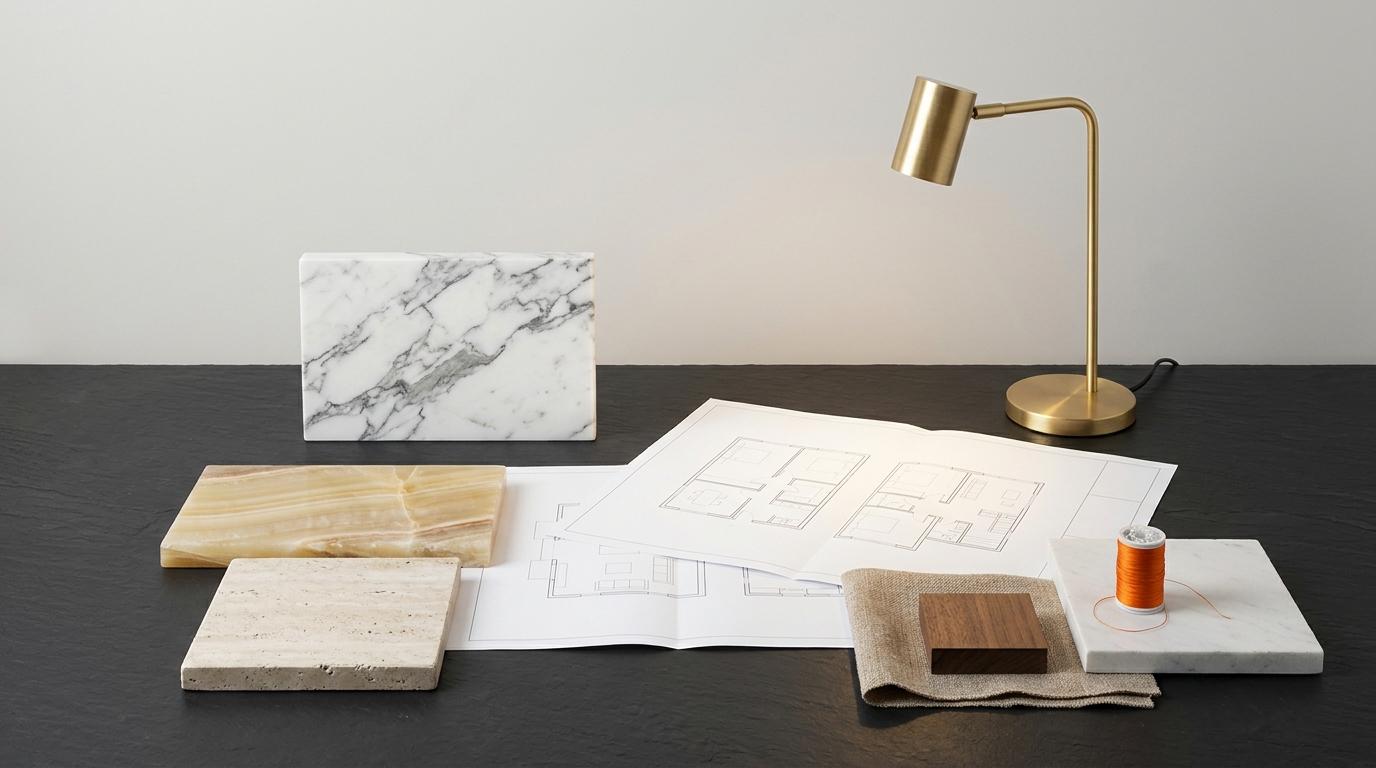
In the luxury market, details define value. The typography, color palette, and fluid page transitions on your site reflect your aesthetic judgment just as clearly as your choice of marble or furniture.
This is why custom web development is the highest-leverage investment for design studios. Generic templates rarely capture a studio's authentic signature.
Showcasing Premium Quality: The Aurumstone Project
When we partnered with AURUM STONE SYSTEMS, the goal was straightforward: the website had to communicate the natural elegance of both quarried and engineered stone (marble, quartz, onyx, and porcelain stoneware). A product of this level requires exceptional visual fidelity, as buyers scrutinize every vein and surface texture.
We built a structured catalog by category so visitors could explore materials effortlessly. On the homepage, we introduced a clear block outlining 4 straightforward steps: consultation, material selection, measurement and fabrication, and delivery. This structure removed guesswork and made the engagement model transparent. In addition, a bilingual setup (Georgian and English) allowed the company to communicate seamlessly with international partners. You can explore similar case studies in our projects.
How to Organize Your Portfolio
Your portfolio should never look like a cluttered photo dump. Prospective clients arrive with specific needs: one wants smart planning for a compact apartment, another wants interior design for a boutique restaurant.
Here is the best practice for structuring project work:
- Project Card: On the main page, feature one striking photo, the project name, location, and square footage.
- Case Study Page: Clicking a project opens the full narrative. What was the brief? What spatial challenges were overcome? What materials were selected?
- Before and After Visuals: If you completed a full renovation or adaptive reuse, this is the clearest way to demonstrate your expertise.
A structured portfolio answers the client's core question: "Can this studio execute exactly what I need?"
A Transparent Process: Steps That Eliminate Client Anxiety
Interior design is a complex, long-term journey. Many clients carry anxiety from past experiences with contractors or designers who missed deadlines or exceeded budgets. Your website is your best tool to remove that friction.
When you outline your working methodology step by step (discovery meeting, design brief, 3D renders, site supervision), prospective clients see a dependable system. In high-stakes projects, a clear system guarantees peace of mind.
Frequently Asked Questions
What materials are needed to build a design studio website?
First, you need high-resolution photography of your completed projects, your brand assets, and a breakdown of your services. If you do not have project descriptions written yet, our team helps you draft and refine the copy and narrative structure.
How fast does a website load with high-resolution imagery?
Using modern web frameworks like Next.js, images are automatically compressed and optimized on the fly. You get pin-sharp visuals at smaller file sizes, ensuring the site loads in seconds, even on mobile networks.
How does a website help in landing international clients?
A multilingual website allows you to attract expats, foreign property owners, and investors looking for a trusted design team in Georgia without having to rely on word-of-mouth.
At the end of the day, a modern design studio website is far more than an online brochure. It communicates your methodology, justifies your pricing, and gives clients confidence in their decision. If you want your work to command attention online, book a free consultation with our team and let us build a digital presence worthy of your craft.